
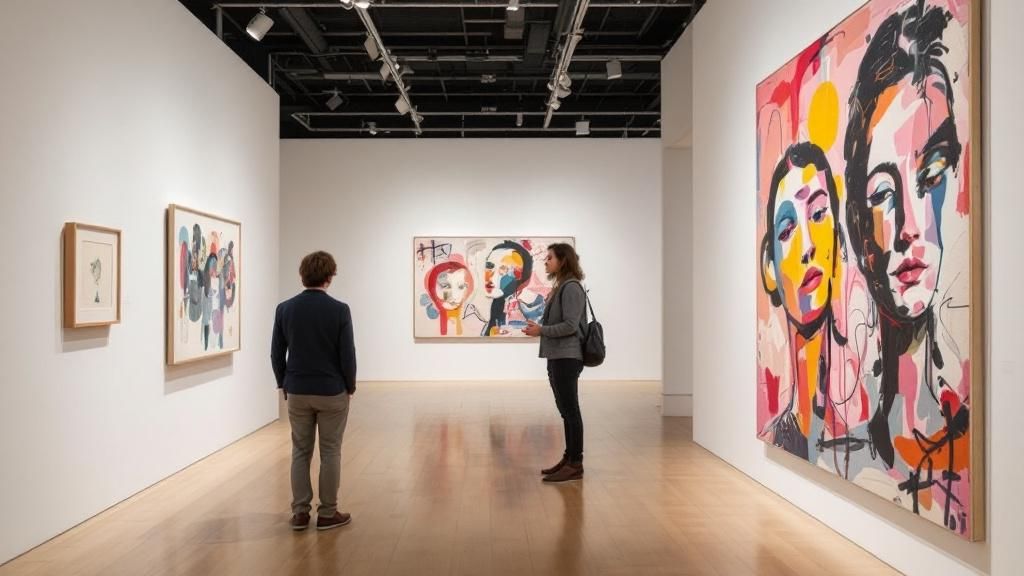
The Turner Prize has functioned as a gauge of current creative innovation, and this year’s showcase proves no exception. By showcasing works that intentionally obscure the boundaries between abstraction and representation, the exhibition organisers have designed a thought-provoking challenge to audiences’ assumptions about what art can express. This article examines how the chosen creators employ non-traditional approaches and intellectual models to interrogate our grasp of visual language, ultimately considering whether the traditional distinctions between abstract and representational art retain significance in the contemporary art world.
Reconsidering Conceptual Limits
The Turner Prize display this year deliberately dismantles conventional categorisations that have long governed artistic discourse. By presenting works that smoothly transition between abstraction and figuration, the curators challenge visitors to reassess their preconceptions about the construction of visual meaning. The exhibition shows that modern artists increasingly resist binary thinking, instead embracing hybrid approaches that interrogate how we perceive and interpret visual information. This curatorial strategy prompts visitors to engage more critically with artistic intent and aesthetic experience.
These boundary-crossing works reflect a broader shift within current art practice towards fluid conceptualization and experiential ambiguity. Rather than adhering to rigid formal categories, the featured artists employ techniques that intentionally undermine viewer expectations. The exhibition reveals that abstraction and figuration are not entirely separate territories but rather points along a coherent range. This reimagining invites sustained consideration about the way meaning develops through the interaction between artwork, audience perception, and interpretive context, substantially transforming critical dialogue.
The Progression of Visual Language
Visual language has experienced profound transformation throughout the twentieth and twenty-first centuries, particularly as artists engaged with photography’s threat to representational painting. Modernist movements at first framed abstraction as a fundamental shift from mimetic traditions, setting up seemingly insurmountable conceptual divides. However, contemporary practitioners increasingly recognise these earlier divisions as constructed boundaries. The exhibition shows how visual language develops naturally, integrating diverse influences and methodologies that go beyond traditional categorical boundaries, reflecting our ever more intricate visual culture.
Contemporary artists now integrate elements from abstraction, representation, and conceptual frameworks with remarkable complexity. This integrative approach recognises that artistic expression operates through multivalent channels simultaneously. The Turner Prize exhibition showcases how artists employ tone, structure, arrangement, and symbolic reference to produce complex significations that resist singular interpretation. This evolution demonstrates that artistic language has matured beyond dogmatic constraints, favouring instead a nuanced vocabulary capable of expressing the intricacies inherent in contemporary experience and perception.
Current Understandings
Today’s artists explore abstraction with substantially different philosophical frameworks than their historical predecessors, informed by postmodern theory, digital environments, and global artistic traditions. Rather than pursuing absolute abstraction as an ideological endpoint, modern artists treat abstract forms as means of expression within wider strategic frameworks. The display features artworks where geometric shapes, mark-making, and colour interactions sit alongside representational imagery and textual elements. This inclusive methodology demonstrates contemporary understanding that visual significance develops through multifaceted exchanges rather than through individual aesthetic allegiances or stylistic dogmas.
The chosen artists display considerable skill in engaging with diverse aesthetic modes simultaneously, producing works that repay careful consideration and analytical openness. Their work indicates that contemporary art operates more and more as a conversation among artist, artwork, and viewer, rather than as a unidirectional statement. By integrating varied aesthetic vocabularies, these artists recognise that the creation of meaning in modern cultural contexts demands careful engagement of conflicting visual frameworks. The exhibition ultimately proposes that contemporary interpretation requires viewers relinquish rigid categorical thinking, adopting in its place the generative uncertainty that defines advanced creative work.
Critical Reception and Public Discourse
The exhibition has generated significant discussion amongst academic and critical circles, with responses spanning from strong approval to careful reservations. Conservative voices have queried whether the fusion of abstract and representational forms represents authentic advancement or just aesthetic confusion. Alternatively, contemporary perspectives have applauded the curators for questioning entrenched categories that cease to reflect current artistic approaches. This divergence of opinion underscores the exhibition’s importance as a driver of substantive conversation within cultural institutions and the broader public.
Public participation in the exhibition has gone beyond initial forecasts, drawing varied visitor groups beyond the established art-world circles. Social media discourse reveals that visitors are actively grappling with the artistic theoretical foundations, exchanging viewpoints and questioning alternative interpretations. Museums have reported increased footfall and extended viewing times, demonstrating that patrons are genuinely invested in understanding creative intent. This grassroots enthusiasm demonstrates that contemporary art can resonate powerfully with the wider audience when presented with sufficient contextual support and cognitive accessibility.
The exhibition’s significance extends beyond immediate assessment by critics, potentially influencing future how curators work and artistic orientation within institutional frameworks. Emerging artists have identified the exhibition as a pivotal moment, endorsing experimental practices that synthesise the abstract and the representational. Educational institutions are beginning including the themes from the exhibition into their curricula, recognising its educational value. As dialogue evolves forward, the Turner Prize exhibition appears poised to hold a prominent role in contemporary art history, transforming discussions concerning artistic categorisation and creative possibility.
